But this is about more than green waste. It is also about consistency in how services are labelled and justified.
At the 17 March 2026 meeting, the City of Onkaparinga Council voted to keep the current fee-for-service green organics drop-off system. That means residents still have to pay if they want to use the service.
Voting to keep user pays, were Crs Platten, Davis, Fisher, Pritchard, Stafford, Jew, Yeomans & Eaton, while voting to introduce vouchers was Cr Themeliotis.
The decision was clear, 8 votes to 1.
Council was considering whether to bring back four free green waste passes per year for residents.
Administration gave councillors two choices:
Council chose Option 1. So nothing changes. Residents still have to pay.
Because the report strongly pushed councillors toward that outcome.
The report did not really present this as a question of helping residents, it presented it as a question of money. The message was simple:
Once the issue is framed like that, the result becomes much easier to predict.
The report estimated that bringing back four free passes would cost about: $386,685 per year.
It also said:
It said the current system is “working”. The report said that in the past 12 months:
That was then used to suggest this is not a major everyday service for most people. It was presented as more of an occasional extra.
That matters because once a service is described as an “extra”, it becomes easier to argue that users should pay for it themselves.
A lot of people worry that charging for green waste disposal could lead to more illegal dumping.
The report said there was no significant increase in illegally dumped green organics after the change to user-pays.
It listed organics-related dumping requests as:
That helped weaken one of the strongest arguments for bringing free passes back.
This is not just about whether people pay to drop off green waste. It is also about how Council describes services.
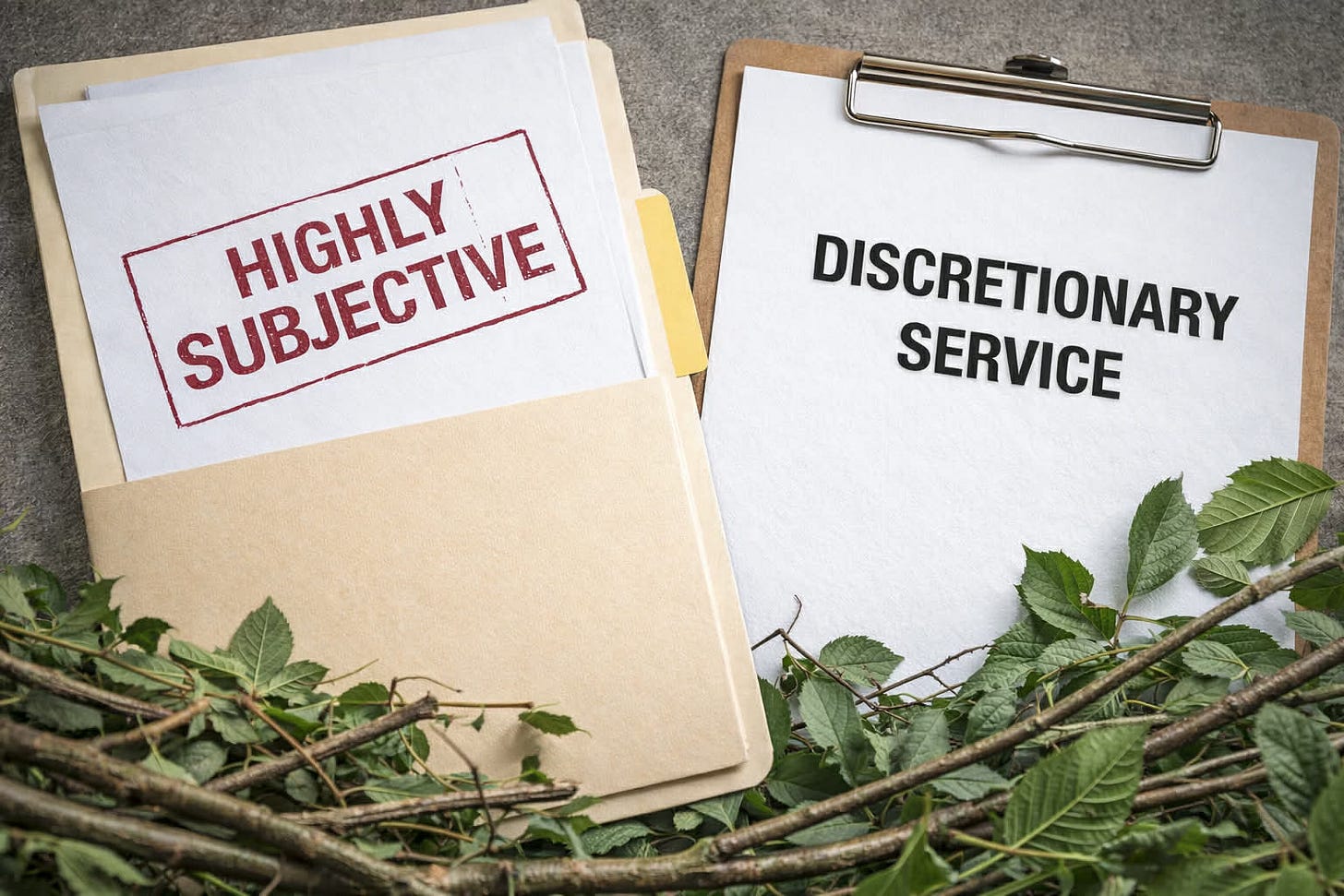
In this report, administration treated the green organics drop-off service as a discretionary service. That label was very important. It helped support the argument that this is not something all ratepayers should fund.
But here is the problem.
Back on 17 September 2024, Cr Themeliotis asked for a list of services and programs staff considered discretionary. The official response said identifying discretionary services is “highly subjective.” In other words:
That is the inconsistency.
Because it raises a fair question about consistency. If a label is too unclear to give councillors a proper list, then it should not suddenly become clear enough to justify a recommendation.But that is what seems to have happened here.
There is another point sitting behind all of this. Across the city, one of the biggest public complaints is maintenance — overgrown areas, vegetation, verge condition, and general upkeep of public spaces.
That is a separate issue from the green waste report itself, but it still matters. Because when draft budget choices are being shaped, some issues seem to be brought forward very clearly, while other major public concerns do not seem to be made as visible in the same way.
That affects the bigger picture councillors are working within.
Council voted to keep green waste drop-off as a user-pays service.
But the bigger story is this:
Council has now decided that residents will keep paying to use this service.
That is the decision, but there is a bigger issue underneath it.
If “discretionary” is too subjective for scrutiny, it should not suddenly become certain when it is useful to defend charging residents.